7 Day Gluten-Free Weight Loss Diet: Plan + Prep
A practical 7-day gluten-free weight loss diet with meals, calories, protein, grocery prep, workouts, and portion adjustments.
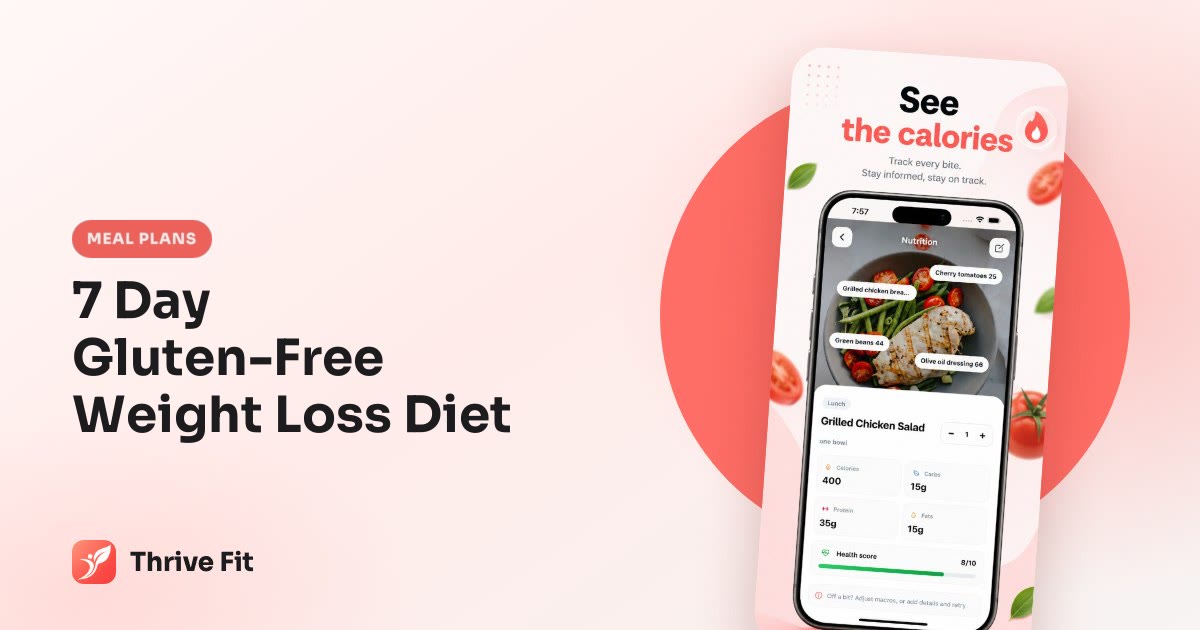
A 7 day gluten-free weight loss diet can work if it creates a calorie deficit, includes enough protein, and keeps portions controlled. Gluten-free does not mean low-calorie, so this plan uses mostly naturally gluten-free foods like eggs, Greek yogurt, chicken, fish, tofu, beans, rice, quinoa, potatoes, fruit, and vegetables.
Use the menu below as a 1,600–1,800 calorie starting point, then adjust portions to your own target.
Before You Start: Gluten-Free Does Not Automatically Mean Weight Loss
Weight loss comes from eating fewer calories than you burn over time. Gluten-free breads, crackers, cookies, granola, snack bars, and baked goods can still be high in calories and easy to overeat.
Strict gluten avoidance matters most for people with celiac disease, diagnosed gluten sensitivity, or a clinician-advised gluten-free diet. If you think you may have celiac disease, speak with a healthcare professional before removing gluten, because testing can be affected after you go gluten-free.
The goal here is simple: a 7-day gluten-free plan built around lean protein, vegetables, fruit, gluten-free starches, healthy fats, and controlled portions. Seven days can reduce decision fatigue and help you start a deficit, but lasting fat loss comes from repeating useful habits for weeks.
Quick decision checklist
- Do I medically need strict gluten-free? If yes, use certified gluten-free products and avoid cross-contact.
- Is my main goal weight loss? If yes, set a calorie target before choosing portions.
- Do I rely on gluten-free packaged snacks daily? If yes, cap them at 1 planned serving per day.
- Do I have a protein source at every meal? Aim for 25–40 g protein at breakfast, lunch, and dinner, depending on body size and calorie target.
Set Your 7-Day Calorie and Protein Target
Use a modest deficit, not a crash diet. Thrive Fit uses Mifflin–St Jeor BMR × activity factor, then about 300 calories below maintenance for weight loss, with targets kept between 1,200 and 3,500 calories. You can estimate your own starting point with the free calorie calculator, or read the full guide on how many calories to eat to lose weight.
The meal plan can be scaled. Keep the same meals, then use smaller portions for lower targets or larger portions for higher targets.
Prioritize protein because it makes a deficit easier to follow. Thrive Fit uses 1.8 g protein per kg body weight for weight-loss goals. This menu sits roughly around 1,600–1,800 calories before personal adjustments.
Worked example, illustrative: 35-year-old woman, 165 cm, 80 kg, light activity.
- Mifflin–St Jeor BMR = 10×80 + 6.25×165 - 5×35 - 161 = about 1,495 kcal
- Light activity factor 1.375 gives maintenance of about 2,056 kcal
- Weight-loss target = about 1,756 kcal/day
- Protein target at 1.8 g/kg = 144 g/day
- Fat at 28% of calories = about 55 g/day
- Carbs fill the rest = about 172 g/day
The 7-Day Gluten-Free Weight Loss Diet Plan
Use certified gluten-free oats if needed. Check labels on sauces, spice blends, deli meats, stock, marinara, tamari, and packaged foods. If you need strict gluten-free, avoid cross-contact from shared toasters, cutting boards, fryers, and bulk bins.

| Day | Breakfast | Lunch | Dinner | Snack |
|---|---|---|---|---|
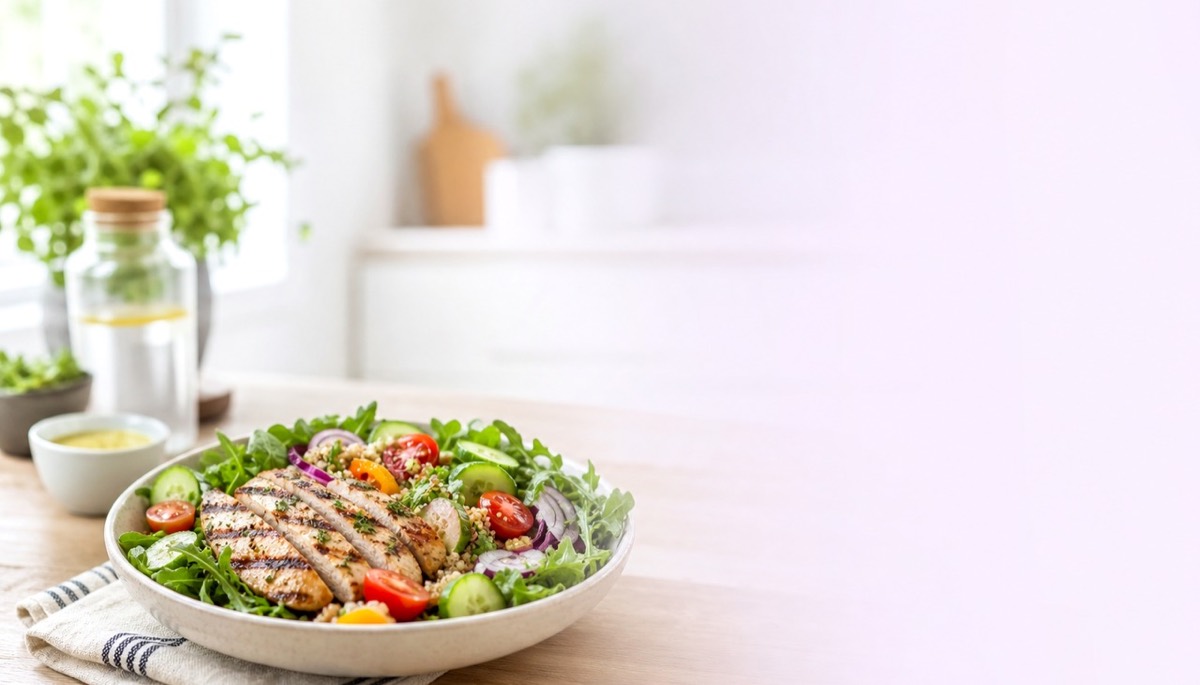
| 1 | Greek yogurt bowl with berries, chia, and certified gluten-free oats | Chicken quinoa salad with cucumber, tomato, spinach, and olive oil-lemon dressing | Salmon, roasted sweet potato, and broccoli | Apple with 1 tbsp peanut butter |
| 2 | 2-egg veggie omelet with potatoes | Turkey lettuce-rice bowl with avocado salsa | Turkey chili with beans and corn | Cottage cheese with pineapple |
| 3 | Protein smoothie with Greek yogurt, banana, spinach, and peanut butter powder | Tuna rice-cake stack with side salad | Chicken fajita bowl over cauliflower rice plus black beans | Carrots and hummus |
| 4 | Certified gluten-free overnight oats with protein-rich yogurt | Lentil soup with side salad | Lean beef or tofu stir-fry with rice and vegetables using gluten-free tamari | Boiled eggs and fruit |
| 5 | Egg-and-sweet-potato hash | Salmon or chickpea salad bowl | Turkey meatballs with zucchini noodles and marinara labelled gluten-free | Greek yogurt |
| 6 | Cottage cheese bowl with berries and walnuts | Chicken taco bowl with rice, beans, lettuce, salsa, and measured cheese | Shrimp, quinoa, and roasted vegetables | Rice cakes with tuna or avocado |
| 7 | Scrambled eggs with spinach and fruit | Leftover chili or lentil soup | Sheet-pan chicken thighs, potatoes, and green beans | Protein smoothie or hummus with vegetables |
For more gluten-free meal ideas, see the free gluten-free meal plan and the full meal plans library.
Gluten-Free Grocery List and 90-Minute Meal Prep
1-person grocery list for 7 days
Proteins: 1 dozen eggs, 1 large tub Greek yogurt, 2 chicken breasts, 1 lb lean turkey, 2 salmon fillets, 1 can tuna, 1 lb shrimp or tofu, cottage cheese, hummus.
Carbs: certified gluten-free oats, quinoa, rice, sweet potatoes, potatoes, rice cakes, black beans, lentils, corn.
Produce: spinach, romaine, cucumbers, tomatoes, broccoli, zucchini, green beans, bell peppers, onions, berries, bananas, apples, pineapple, carrots.
Fats/flavor: avocado, olive oil, peanut butter, chia seeds, walnuts, salsa, marinara labelled gluten-free, gluten-free tamari, lemon, herbs, spices.
Labels to check: oats, sauces, spice blends, deli meats, stock, marinades, packaged snacks, protein powders, and anything processed in a facility with wheat if strict gluten-free is required.
90-minute prep checklist
- Cook 2 cups dry rice or quinoa.
- Roast 3 trays of vegetables and potatoes.
- Cook turkey chili.
- Grill or bake chicken.
- Boil 6 eggs.
- Wash and chop salad vegetables.
- Portion 4 snacks into containers.
- Label sauces that are gluten-free.
How to Adjust Portions for Your Calorie Target
Do not redesign the whole plan. Keep protein steady first, then adjust starches and fats. Oils, nuts, cheese, gluten-free baked goods, and snack foods are the easiest places to overshoot calories.
| Goal | Simple adjustment |
|---|---|
| Need about 100 fewer calories? | Remove 1 tbsp peanut butter, 2 tsp olive oil, 1/2 avocado, or 1/2 cup cooked rice. |
| Need about 200 fewer calories? | Skip a packaged gluten-free snack and add vegetables, or reduce both rice by 1/2 cup and oil by 2 tsp. |
| Need about 150–250 more calories? | Add 1 cup cooked potato, 3/4 cup cooked rice, 1 extra Greek yogurt, or 1 banana plus 1 tbsp peanut butter. |
| Keep protein steady | Use a palm-size portion of chicken, fish, turkey, tofu, or Greek yogurt at meals before cutting protein. |
Add a Simple 7-Day No-Equipment Workout Schedule
Exercise supports weight loss, fitness, and consistency. It does not cancel out unplanned snacking or large portions. Start easy if you are new, and stop if you feel sharp pain, dizziness, or unusual symptoms.
Thrive Fit includes guided bodyweight circuits at home with trainer videos, timed work and rest, and no equipment. You can also use this beginner schedule.
| Day | Workout |
|---|---|
| 1 | Full-body circuit, 3 rounds: squat to chair 10 reps, incline push-up 8 reps, glute bridge 12 reps, dead bug 8 per side, march in place 45 seconds, rest 60 seconds. |
| 2 | Walk 25–35 minutes easy pace. |
| 3 | Core and lower body, 3 rounds: reverse lunge 8 per side, side plank 20 seconds per side, bird dog 8 per side, wall sit 30 seconds, rest 60 seconds. |
| 4 | Rest or 20-minute gentle walk. |
| 5 | Full-body intervals: 30 seconds work/30 seconds rest for 3 rounds of bodyweight squats, step-back lunges, incline push-ups, slow mountain climbers, plank. |
| 6 | Walk 30–45 minutes. |
| 7 | Rest and meal prep for the next week. |
If you want a slower build, use this home workout plan for beginners.
Track the Week and Know What to Change Next
Do not judge fat loss from one weigh-in. Water, sodium, stress, digestion, sleep, hard workouts, and the menstrual cycle can all move the scale.
Track meals, body weight if you choose, hunger, energy, and adherence for the 7 days. Thrive Fit can help with calorie targets, Meal Scan estimates with editable logging, water tracking, weight and BMI logs, progress photos, streaks, achievement badges, and in-app support chat.
7-day tracking sheet
Each day record:
- Calories planned
- Protein target hit: yes/no
- Gluten-free meals followed: yes/no
- Workout or walk completed
- Hunger 1–5
- Energy 1–5
- Morning weight, if you choose to weigh daily
End-of-week review
- If hunger averaged 4–5, add 100–200 calories from protein and high-fiber carbs.
- If calories were exceeded on 4+ days, simplify the menu and pre-portion snacks.
- If weight jumps but adherence was strong, wait for a 2–3 week trend before cutting calories further.
FAQ
Can you lose weight on a gluten-free diet?
Yes, if you are in a calorie deficit. Gluten-free foods are not automatically lower in calories, so focus on lean protein, vegetables, fruit, beans, rice, potatoes, quinoa, and measured fats.
How much weight can I lose in 7 days gluten-free?
Seven days is enough to start habits and may change scale weight, but some of that can be water. A realistic fat-loss pace for many adults is gradual, often around 0.5–1% of body weight per week when the deficit is consistent.
Is gluten-free better for weight loss than a regular calorie deficit?
Not for most people. Gluten-free is medically important for celiac disease and some diagnosed sensitivities, but weight loss still depends on calories, protein, activity, sleep, and consistency.
Are rice, potatoes, corn, quinoa, and oats gluten-free?
Rice, potatoes, corn, and quinoa are naturally gluten-free. Oats are naturally gluten-free but are often contaminated with wheat, barley, or rye, so choose certified gluten-free oats if you need strict gluten-free.
What gluten-free snacks are good for weight loss?
Good options include Greek yogurt, cottage cheese, boiled eggs, fruit, carrots with hummus, tuna on rice cakes, and a measured serving of nuts. Keep packaged gluten-free snacks to planned portions.