16:8 Intermittent Fasting 7-Day Meal Plan
A ready-to-follow 16:8 fasting week with meals, calories, macros, prep, workouts, safety notes, and adjustment rules.
A good 16:8 intermittent fasting 7-day meal plan gives you an 8-hour eating window, 3 meals, 1 snack, enough protein, and portions that match your calorie target. Use the sample 12:00 p.m.–8:00 p.m. plan below for one week, then adjust portions based on hunger, energy, and your weight trend.
This is not a crash diet. It is a meal-timing structure that can make calorie control simpler if it fits your life.
16:8 intermittent fasting: the simple rules before you start
16:8 means you fast for 16 hours and eat all meals inside an 8-hour window. For example, you might eat from 12:00 p.m. to 8:00 p.m., then fast until noon the next day.
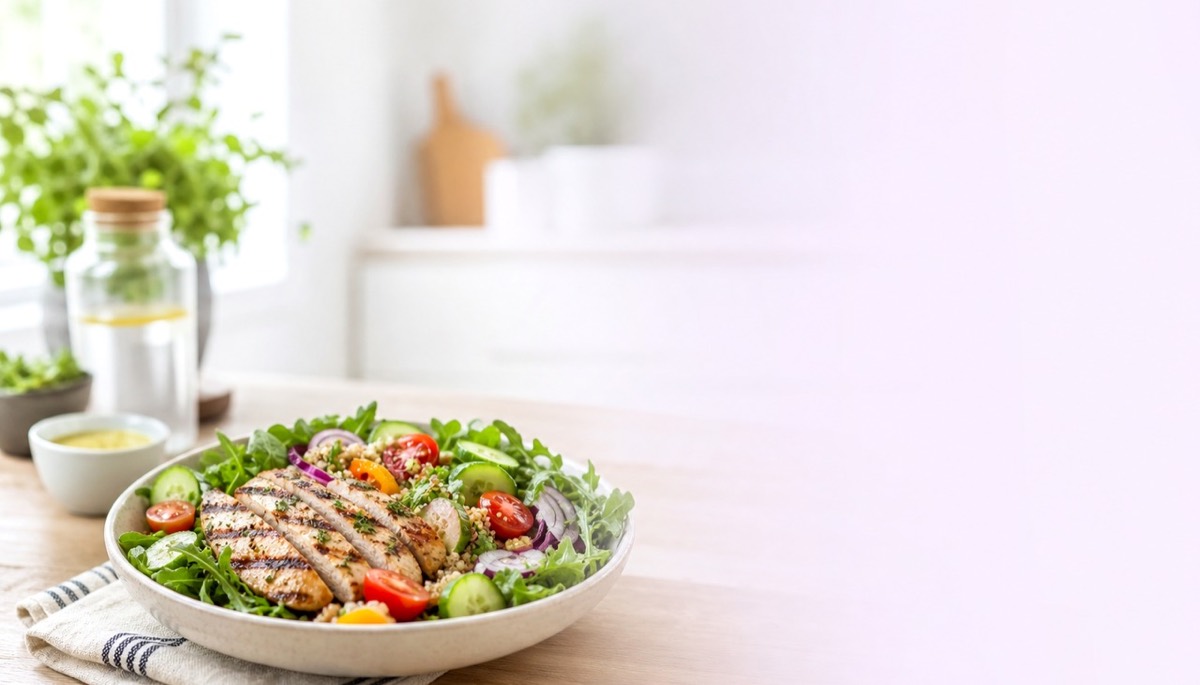
The key point: 16:8 is not magic fat loss. Weight change still depends mostly on calories, protein, activity, sleep, and consistency. Fasting can help because it reduces grazing time, but you can still overeat inside the window.
Two beginner-friendly eating windows:
- 10:00 a.m.–6:00 p.m. if you prefer earlier meals.
- 12:00 p.m.–8:00 p.m. if you want dinner with family or friends.
During the fasting window, most people stick to water, plain sparkling water, black coffee, and unsweetened tea. If your goal is a clean fast, avoid calories.
Safety note: if you are pregnant, underweight, have a history of eating disorders, have diabetes or use blood-sugar medication, or have a medical condition, ask a clinician before fasting.
Start checklist
- Choose one 8-hour window for all 7 days.
- Pick 3 meal times plus 1 snack inside it, such as 12:00 meal 1, 3:00 meal 2, 6:30 dinner, 7:45 snack.
- Set a kitchen cutoff alarm 15 minutes before the window closes.
- Keep water, black coffee, or unsweetened tea available during the fast.
- Stop the plan and seek professional advice if fasting causes dizziness, binge eating, or feeling unwell.
Set your calorie and macro targets for the 7-day plan
The most common 16:8 mistake is squeezing in too little food early, then overeating at night. Set a target before you start.
First estimate maintenance calories. Then, if your goal is weight loss, use a modest deficit rather than an extreme cut. The free calorie calculator can help, and this guide on how many calories to eat to lose weight explains the math in more detail.
Protein matters even more in a shorter eating window. Include it at every meal and snack. It helps fullness and supports training.
In Thrive Fit, nutrition targets use Mifflin–St Jeor BMR times an activity factor, then about 300 calories below maintenance for weight loss. Protein is based on body weight, fat is set around 28% of calories, and carbs fill the rest.
Scale the plan by changing portions, not by skipping the protein anchor.
Illustrative target example
Example only. Use your own height, weight, age, sex, and activity level.
A 35-year-old woman, 165 cm, 75 kg, lightly active:
- Estimated BMR using Mifflin–St Jeor: about 1,445 kcal/day
- Light activity factor 1.375: about 1,987 kcal/day maintenance
- Modest weight-loss target: about 1,687 kcal/day
- Protein at 1.8 g/kg: 135 g/day
- Fat at 28% of calories: about 52 g/day
- Carbs fill the rest: about 169 g/day
The 7-day 16:8 intermittent fasting meal plan
Use this sample eating window: 12:00 p.m.–8:00 p.m. Each day has 3 meals and 1 snack, so you do not need one huge dinner. Calories are roughly 1,600–1,800 per day with 125–130 g protein.
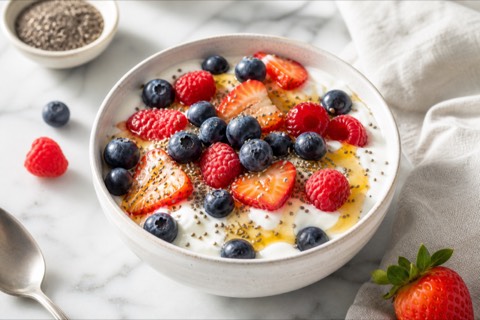
For a free day-by-day version with recipes, see the Thrive Fit Intermittent Fasting 16:8 meal plan. The app also includes meal plans with recipes and macros.
| Day | 12:00 meal 1 | 3:00 meal 2 | 6:30 dinner | 7:45 snack | Daily target |
|---|---|---|---|---|---|
| 1 | Greek yogurt, berries, oats, chia | Turkey hummus wrap with salad | Salmon, quinoa, roasted broccoli | Cottage cheese with berries | About 1,650 kcal, 130 g protein |
| 2 | Eggs with avocado toast | Chicken rice salad bowl | Tofu vegetable stir-fry with rice | Protein smoothie | About 1,700 kcal, 125 g protein |
| 3 | Protein oatmeal with banana | Tuna chickpea cucumber bowl | Turkey chili with beans | Apple with peanut butter and skyr | About 1,650 kcal, 130 g protein |
| 4 | Cottage cheese bowl with banana and walnuts | Shrimp rice bowl | Chicken fajita plate with peppers and tortillas | Edamame | About 1,700 kcal, 130 g protein |
| 5 | Protein pancakes with berries | Lentil salad with boiled eggs | Cod, potatoes, and green beans | Greek yogurt with honey | About 1,650 kcal, 125 g protein |
| 6 | Vegetable omelet with toast | Turkey burger bowl with potatoes | Tofu curry with rice | Kefir and fruit | About 1,750 kcal, 125 g protein |
| 7 | Overnight oats with whey or high-protein yogurt | Chicken pita with cucumber salad | Lean beef or tempeh tacos | Ricotta or Greek yogurt cocoa bowl | About 1,650 kcal, 125 g protein |
How to adjust the plan for your calorie target without rebuilding it
Keep the structure. Change portions. Most calorie changes should come from carb and fat portions while protein stays steady.
Portion-adjustment toolkit
To add about 100 kcal, add one of these:
- 1 slice whole-grain toast
- 1 small banana
- 150 g cooked potato
- 2 teaspoons olive oil
To remove about 100 kcal, remove one of these:
- 1 tablespoon peanut butter
- 1 tablespoon olive oil
- 1/2 cup cooked rice
- 25 g nuts
To add about 25 g protein, add one of these:
- 1 scoop whey or plant protein
- 120 g chicken breast
- 1 can tuna
- 250 g Greek yogurt
- 200 g tofu
- 4 egg whites
Preference swaps:
- Dairy-free: Greek yogurt to soy yogurt plus protein powder.
- Gluten-free: wrap to rice bowl or corn tortillas.
- Vegetarian: chicken or fish to tofu, tempeh, eggs, lentils, or Greek yogurt.
- Pescatarian: use tuna, salmon, cod, shrimp, eggs, yogurt, tofu, and beans.
- Lower-carb: reduce rice, oats, wraps, or potatoes and add extra vegetables, lean protein, and a small fat portion.
For restaurants or social meals inside the window, anchor protein first. Then add one carb portion, one fat portion, and vegetables. Keto and 16:8 are different choices. You do not need to remove carbs to do 16:8.
Grocery list and 90-minute meal prep for the week
Prep makes fasting easier because your first meal is ready before hunger takes over. Cook proteins and grains in batches, keep sauces separate, and use frozen vegetables as backup. Pre-portion snacks so the eating window does not turn into all-day grazing.
Core grocery list
- Proteins: eggs, Greek yogurt or soy yogurt, chicken/turkey, salmon/cod/tuna, tofu/tempeh, cottage cheese or kefir.
- Carbs: oats, rice/quinoa, potatoes, whole-grain wraps or corn tortillas, beans/lentils, fruit.
- Produce: berries, bananas, apples, broccoli, peppers, greens, cucumbers, onions.
- Fats: avocado, olive oil, peanut butter, nuts, chia.
- Pantry: salsa, hummus, spices, low-sugar marinades.
90-minute prep checklist
- 0:00: start rice or quinoa and wash potatoes.
- 0:10: season chicken or tofu and place on a sheet pan.
- 0:20: chop broccoli, peppers, cucumbers, and salad vegetables.
- 0:35: bake protein and roast vegetables.
- 0:45: boil eggs and mix overnight oats for 2 days.
- 1:00: portion Greek yogurt or dairy-free alternative, berries, nuts, and edamame snacks.
- 1:15: assemble 3 lunch boxes with protein, carb, vegetables, and sauce on the side.
- 1:30: label containers by day.
When to work out on a 16:8 schedule
The best workout time is the one you can repeat. Morning training is fine if it feels good. Midday training works well between meal 1 and meal 2. Evening training can fit before dinner.
If fasted training feels poor, move the workout into the eating window or place your first meal 1–2 hours before training. Beginners can do strength or circuit training 3 days per week, with walking on other days. For a full beginner routine, see this home workout plan.
Thrive Fit workouts are guided bodyweight circuits at home, with no equipment. A trainer video shows every exercise, with timed work and rest.
7-day movement schedule
- Monday: 25-minute bodyweight circuit before meal 1 or between meal 1 and 2.
- Tuesday: 30-minute brisk walk.
- Wednesday: 20-minute core and stability session.
- Thursday: rest or easy walk.
- Friday: 25-minute bodyweight circuit.
- Saturday: 30–45-minute walk or optional circuit.
- Sunday: rest and prep.
Sample circuit: warm up 5 minutes with marching, hip circles, arm circles, and bodyweight good mornings. Then complete 3 rounds:
- Bodyweight squats: 12 reps
- Incline push-ups: 8–12 reps
- Reverse lunges: 10 per side
- Glute bridges: 15 reps
- Plank: 30 seconds
- Mountain climbers: 30 seconds
Rest 60–90 seconds between rounds.
Track results and troubleshoot the first 3 weeks
One week is enough to test the schedule. It is not enough to judge fat loss precisely. Track your weekly average weight, not one emotional weigh-in.
Use a 3-week review before changing calories unless the plan is clearly too hard or you feel low-energy. In Thrive Fit, users can log weight and BMI, progress photos, water target, meals, and Meal Scan estimates, which can be edited before logging.
3-week review checklist
- Weigh 3 mornings per week after the bathroom and record the average.
- Log whether you hit protein on at least 5 of 7 days.
- Complete at least 3 workouts or walks weekly.
- Take one progress photo per week in the same lighting.
- Rate hunger from 1 to 5 each evening.
Troubleshooting table
| Problem | Fix |
|---|---|
| You overeat at 12:00 | Add a planned high-protein snack at 11:45 inside the window after shifting the window earlier. |
| Evening hunger is high | Move more calories to dinner and add vegetables or potatoes. |
| Energy is low during workouts | Train after meal 1 or add 25–40 g carbs before training. |
| Weight average is unchanged after 3 weeks | Reduce 100–150 kcal per day or add two 20-minute walks per week. |
| Fasting triggers binge eating | Stop fasting and use a regular meal schedule. |
FAQ
What can I eat on a 16:8 intermittent fasting meal plan?
Eat balanced meals inside your 8-hour window: lean protein, high-fiber carbs, vegetables, fruit, and healthy fats. Good options include eggs, Greek yogurt, chicken, fish, tofu, beans, rice, oats, potatoes, vegetables, berries, nuts, and olive oil.
What is the best eating window for 16:8 fasting?
The best window is the one you can repeat. Many people like 12:00 p.m.–8:00 p.m. because it allows dinner with others. If you prefer earlier meals, 10:00 a.m.–6:00 p.m. can work well.
How many calories should I eat on 16:8 intermittent fasting?
Use your maintenance calories first, then adjust to your goal. For weight loss, a modest deficit of about 300–500 calories per day is a common starting point. Do not skip protein to cut calories.
Can I drink coffee during the 16-hour fast?
Yes. Black coffee is usually fine during the fasting window. Unsweetened tea, water, and plain sparkling water are also common. Avoid milk, cream, sugar, and calorie-containing drinks if you want a clean fast.
Who should not do 16:8 intermittent fasting?
People who are pregnant, underweight, have a history of eating disorders, have diabetes or use blood-sugar medication, or have a medical condition should ask a clinician before fasting. Stop if fasting causes dizziness, binge eating, or feeling unwell.