16/8 Intermittent Fasting 7 Day Meal Plan
A 7-day 16/8 fasting meal plan with meal timing, calories, protein, prep, workouts, and portion swaps for your goal.
A good 16/8 intermittent fasting 7 day meal plan gives you an 8-hour eating window, repeatable meals, enough protein, and calories that match your goal. Use the plan below as a 1,650–1,800 calorie template, then adjust portions up or down instead of treating fasting as magic.
The default schedule here is 12:00 pm to 8:00 pm. Swap meals between days if you want, as long as your daily calories and protein stay close.
Start here: what 16/8 intermittent fasting means
16/8 intermittent fasting means you fast for 16 hours and eat your meals inside an 8-hour window. It is a meal-timing structure, not a guaranteed fat-loss method. Your weight still changes based on your average calorie intake over time.
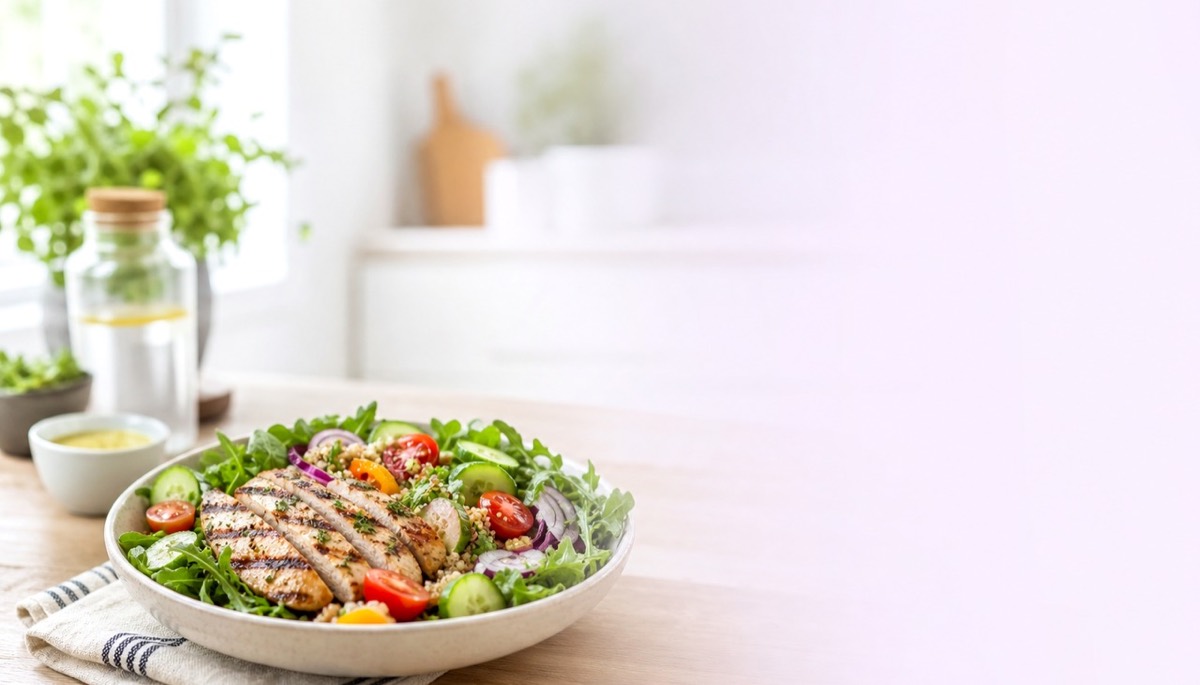
Choose a window that fits your real life:
- 12:00 pm–8:00 pm: good if you like family dinners or train after work.
- 10:00 am–6:00 pm: good if you wake up hungry and prefer earlier dinners.
- 1:00 pm–9:00 pm: good for later work schedules, but avoid late-night grazing.
During the fasting window, most people stick with water, plain sparkling water, black coffee, and unsweetened tea. Avoid using cream, sugar, alcohol, or snacks during the fast if your goal is a clean, simple routine.
Safety note: if you are pregnant or breastfeeding, under 18, have a history of eating disorders, have diabetes or take glucose-lowering medication, or have a medical condition, speak with a clinician before fasting.
Example 16/8 schedule
- 8:00 pm: finish dinner or planned snack
- 8:00 pm–12:00 pm: fast
- 12:00 pm: first meal
- 3:30 pm: lunch or snack
- 6:30 pm: dinner
- 7:45 pm: optional planned snack
- 8:00 pm: fasting window begins again
Set your calorie and protein target before choosing meals
This 7-day plan is a template, not a personal prescription. For weight loss, start with estimated maintenance calories minus a moderate deficit. For maintenance, body recomposition, or steady energy, eat around maintenance.
Protein matters because a shorter eating window can make it harder to fit enough food in. A useful target for many active adults is about 1.6–2.2 g protein per kg body weight per day. Thrive Fit uses 1.8 g/kg for weight loss and strength goals, and 1.5 g/kg for maintenance.
The free calorie calculator can estimate your starting target. For a deeper explanation, read how many calories to eat to lose weight. In the Thrive Fit app, daily calorie targets use Mifflin–St Jeor BMR times an activity factor, then adjust by goal, with targets kept between 1,200 and 3,500 kcal.
Illustrative worked example, not a personal prescription: a 35-year-old woman, 165 cm, 78 kg, lightly active.
- Estimated BMR by Mifflin–St Jeor: about 1,471 kcal
- Lightly active factor 1.375: about 2,023 kcal/day maintenance
- 300 kcal deficit: about 1,720 kcal/day
- Protein at 1.8 g/kg: about 140 g/day
The 7-day 16/8 intermittent fasting meal plan
Use a 12:00 pm–8:00 pm eating window. Each day has 3–4 eating occasions so you do not need to cram all nutrition into one huge meal. Calories and protein are estimates.
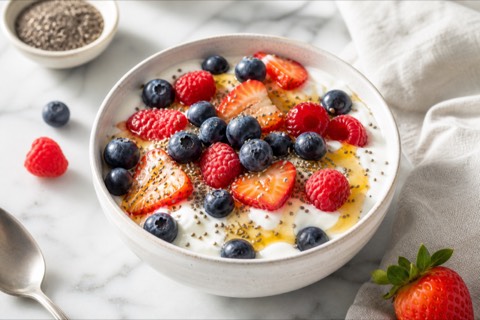
| Day | 12:00 pm | 3:30 pm | 6:45 pm | 7:45 pm | Daily total |
|---|---|---|---|---|---|
| 1 | Greek yogurt bowl with berries, oats, chia, and whey or extra yogurt, about 500 kcal and 40 g protein | Chicken quinoa salad, about 520 kcal and 45 g protein | Turkey chili with beans, about 600 kcal and 50 g protein | Apple, about 95 kcal | About 1,715 kcal, 135 g protein |
| 2 | Veggie omelet with toast | Tuna avocado wrap | Salmon with potatoes and broccoli | Cottage cheese with pineapple | About 1,750 kcal, 135 g protein |
| 3 | Protein smoothie plus peanut butter toast | Tofu rice bowl | Lean beef or bean taco bowl | Carrots with hummus | About 1,700 kcal, 115–135 g protein depending on protein choice |
| 4 | Overnight oats with Greek yogurt | Turkey and veggie sandwich | Chicken stir-fry with rice | Berries and almonds | About 1,700 kcal, 130 g protein |
| 5 | Eggs with black beans and salsa | Shrimp or chickpea Mediterranean bowl | Turkey meatballs with pasta and salad | Kefir or yogurt | About 1,750 kcal, 125–140 g protein |
| 6 | Cottage cheese bowl with fruit and granola | Chicken Caesar-style wrap | Tofu or chicken curry with rice | Banana with peanut butter | About 1,750 kcal, 120–140 g protein |
| 7 | Smoked salmon or egg toast | Lentil soup with side salad and chicken or tofu add-on | Sheet-pan chicken or tempeh with sweet potato and vegetables | Dark chocolate plus strawberries | About 1,700 kcal, 120–140 g protein |
Simple swaps are fine. Trade salmon for chicken, turkey for tofu, rice for potatoes, or yogurt for cottage cheese. Keep calories and protein similar.
Meal prep once, eat all week: grocery list and 90-minute prep
Plan components, not seven separate recipes. This makes the eating window easier because food is ready before hunger gets loud.
Grocery list
- Protein: eggs, Greek yogurt, cottage cheese, chicken breasts, turkey mince, salmon, tuna, tofu, tempeh, lentils, beans, whey or plant protein if you use it
- Carbs: oats, rice, quinoa, whole-grain bread or wraps, potatoes, sweet potatoes, pasta, fruit
- Fats: olive oil, avocado, nuts, peanut butter, chia seeds, tahini
- Produce: berries, apples, bananas, pineapple, broccoli, peppers, zucchini, onions, salad greens, carrots, tomatoes, lemons
- Flavor items: salsa, hummus, curry paste, chili seasoning, garlic, herbs, low-sugar sauces, vinegar
90-minute prep checklist
- Bake 4 chicken breasts or tofu blocks with seasoning, 25–30 minutes.
- Cook 3 cups dry rice or quinoa.
- Roast 2 sheet pans of broccoli, peppers, zucchini, onions, and sweet potato.
- Make 4 jars of Greek yogurt overnight oats.
- Portion 3 snack boxes: fruit plus nuts, cottage cheese plus fruit, carrots plus hummus.
- Mix 2 sauces: salsa-yogurt sauce and lemon-tahini dressing.
- Label containers by day and place Days 4–7 proteins in the freezer if needed.
Refrigerate cooked food promptly. If you will not eat cooked protein within a few days, freeze extra portions. Thrive Fit’s free meal-plan pages show plans day by day with recipes, while the app includes meal plans and logging.
Adjust the plan for weight loss, maintenance, higher protein, vegetarian, or lower carb
The fastest way to personalize this plan is to change portions, not rebuild the whole week. Do not push calories very low just because the eating window is shorter. If you feel weak, cold, dizzy, or preoccupied with food, increase food or stop fasting.
| Goal | Simple adjustment |
|---|---|
| Reduce about 150 kcal | Remove 1 tablespoon olive oil, 1 ounce nuts, or 1/2 cup cooked rice |
| Add about 150 kcal | Add 1 slice whole-grain toast with 1 teaspoon peanut butter, 3/4 cup cooked rice, or 1 Greek yogurt |
| Add 25–30 g protein | Add 1 scoop whey or plant protein, 1 cup Greek yogurt, 4 ounces cooked chicken, 1 can tuna, 1 cup cottage cheese, or 5–6 ounces extra-firm tofu |
| Vegetarian swap | Replace 4 ounces chicken with 5–6 ounces tofu, 1 cup edamame, 1 cup lentils plus Greek yogurt, or tempeh |
| Lower-carb swap | Replace 1 cup rice with extra vegetables plus avocado or olive oil if calories need to stay similar |
Low carb is not required for 16/8. It is only an option if it helps your appetite and energy.
Workouts during a 16/8 week: when to train and what to do
You can train fasted or fed. Beginners often feel better placing workouts near the first meal or inside the eating window. Keep the first week realistic: short bodyweight circuits, walking, and rest.
For a full progression, use the home workout plan for beginners.
7-day training schedule
- Monday: 11:30 am optional walk 20 minutes, 12:00 first meal.
- Tuesday: 5:30 pm bodyweight circuit. Do 3 rounds of 30 seconds squats, 30 seconds incline push-ups, 30 seconds glute bridges, 30 seconds dead bugs, and 30 seconds rest between moves.
- Wednesday: 20–30 minute easy walk.
- Thursday: repeat the circuit and add 30 seconds reverse lunges per side.
- Friday: rest or mobility. Do 2 rounds of cat-cow 8 reps, hip flexor stretch 30 seconds per side, child’s pose 45 seconds.
- Saturday: 25-minute brisk walk or beginner circuit.
- Sunday: rest and meal prep.
Track results for 7 days, then decide what to change
Do not judge the plan by one morning on the scale. Track the eating window, calories, protein, hunger, energy, workouts, water, and weight trend.
Some hunger in the first few days can happen. Dizziness, binge urges, feeling unwell, or anxiety around food are signs to stop or modify the approach. Thrive Fit includes calorie and macro logging, Meal Scan estimates that users can edit, water tracking, weight and BMI logs, progress photos, streaks, and in-app support chat.
End-of-week review checklist
- Did I stay within my eating window at least 5 of 7 days?
- Did I hit protein within 20 g of target at least 5 days?
- Was average hunger 7/10 or lower?
- Did I complete 2 strength sessions or 3 walks?
- Did my 7-day average weight move in the intended direction?
Decision rule: if adherence is good and hunger is manageable, repeat the plan. If hunger is high, add 150–250 kcal from protein and high-fiber carbs. If workouts feel weak, move training after the first meal. If fasting triggers overeating, use the same meals across a longer eating window.
FAQ
What can I eat on a 16/8 intermittent fasting meal plan?
Eat normal balanced meals inside your eating window: protein, vegetables, fruit, whole grains or potatoes, beans or lentils, yogurt, eggs, fish, chicken, tofu, nuts, and planned snacks. The fasting window controls timing, not food quality by itself.
What is the best eating window for 16/8 fasting?
The best window is the one you can repeat. A 12:00 pm–8:00 pm window works well for many people because it keeps dinner social, but 10:00 am–6:00 pm may suit early hunger better.
How many calories should I eat on a 16/8 fasting plan?
Use your maintenance calories as the starting point. For weight loss, a moderate deficit of about 300–500 calories per day is common. For maintenance or hard training weeks, stay closer to maintenance.
Can I drink coffee during the 16-hour fast?
Plain black coffee usually fits a simple fasting window. Unsweetened tea, water, and plain sparkling water are also common choices. Add-ins like sugar, cream, and flavored syrups add calories.
What should I do if I feel dizzy or too hungry while fasting?
Stop the fast, eat a balanced meal, drink water, and review your calories. If dizziness continues, you have diabetes, you take glucose-lowering medication, or you have a medical condition, speak with a clinician.