Starter Workout Routine at Home: 14-Day Plan
Start a safe no-equipment home workout with 20-minute routines, a 14-day schedule, beginner swaps, recovery rules, and progression steps.
A good starter workout routine at home is simple: train your whole body 3 days per week, use no equipment, rest between strength days, and stop each set before your form breaks. Start with the 20-minute Workout A below, then follow the 14-day schedule so you know exactly when to work out, walk, and recover.
This is for ordinary adults starting or restarting fitness at home. If you want a longer plan after this, use our 4-week home workout plan for beginners.
Start here: choose your beginner level in 2 minutes
This routine is for people starting or restarting home workouts with no equipment. You only need space to lie down, a wall or counter, and a chair if squats feel easier with support.
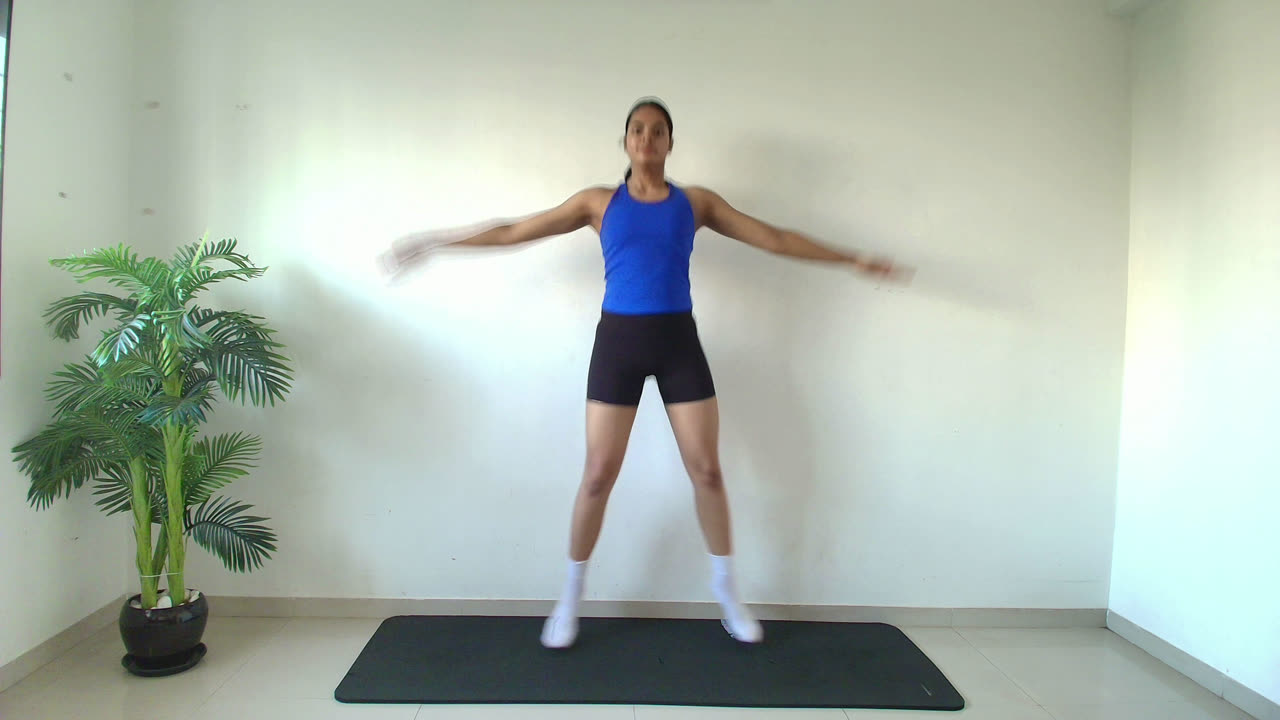
Plan for 15–25 minutes, 3 workout days per week, and at least 1 rest or easy-movement day between strength sessions. Do not start hard just because you feel motivated on day one. Your goal is to finish feeling successful enough to repeat it.
Safety note: if you have chest pain, dizziness, uncontrolled medical conditions, are pregnant, or are recovering from injury, get personal medical guidance before starting.
Beginner level checklist
Start at the lowest level that matches any answer.
| Level | Choose this if... |
|---|---|
| Level 1 | You have not trained in 3+ months, get winded after 1 flight of stairs, or cannot hold a plank for 10 seconds. |
| Level 2 | You can walk 20 minutes comfortably and do 5 chair squats. |
| Level 3 | You can do 10 bodyweight squats and 5 incline push-ups. |
Use Level 1 versions when unsure. Progress comes faster when your joints and habits keep up with your motivation.
The starter workout routine at home: 20 minutes, no equipment
Use timed intervals. Beginners often do better with time than rep targets because you can slow down and focus on control. Your effort target is simple: finish each interval feeling like you could do 2–3 more reps with good form.
Workout A, 20 minutes
Warm-up: 4 minutes
- March in place: 60 seconds
- Arm circles: 30 seconds each way
- Hip hinges: 60 seconds
- Easy step jacks: 60 seconds
Circuit: do 2 rounds in Week 1
| Move | Work | Rest |
|---|---|---|
| Chair squat | 30 sec | 30 sec |
| Incline push-up on counter or wall | 30 sec | 30 sec |
| Glute bridge | 30 sec | 30 sec |
| Dead bug | 30 sec | 30 sec |
| Low-impact step jack | 30 sec | 60 sec |
Cool down: 3 minutes
- Slow walk: 60 seconds
- Hamstring stretch: 30 seconds each side
- Chest stretch: 30 seconds
- Child’s pose or relaxed breathing: 60 seconds
Keep the moves clean. Squat to a comfortable depth, push through your whole foot, brace gently during dead bugs, and use a wall push-up if the counter version makes your hips sag.
Your first 14 days: exactly when to work out, rest, and walk
This schedule avoids hard sessions on back-to-back days. Easy walks and mobility help you build the habit without treating every day like a test. If you miss a day, resume at the next planned workout. Do not double up.
| Day | Plan |
|---|---|
| Day 1 | Workout A |
| Day 2 | Easy walk 10–20 min |
| Day 3 | Rest or 8-min mobility |
| Day 4 | Workout B |
| Day 5 | Easy walk 10–20 min |
| Day 6 | Rest |
| Day 7 | Optional gentle walk |
| Day 8 | Workout A |
| Day 9 | Easy walk 10–20 min |
| Day 10 | Rest or mobility |
| Day 11 | Workout B |
| Day 12 | Easy walk 10–20 min |
| Day 13 | Rest |
| Day 14 | Check progress and choose whether to repeat the week or progress |
Workout B
Do 2 rounds. Rest 30–60 seconds between moves.
- Reverse lunge or supported split squat: 30 seconds per side
- Wall push-up: 30 seconds
- Bird dog: 30 seconds
- Side plank from knees: 30 seconds per side
- March with high knees: 30 seconds
Reverse lunges can be replaced with supported split squats if balance is the problem. Hold a wall lightly, move slowly, and keep the front knee tracking in the same direction as your toes.
Exercise swaps: make every move easier or harder
Do not quit a workout because one move feels too hard. Swap the version. Muscle effort is okay. Sharp joint pain, pinching, or pain that changes your movement is a stop signal.
| Move | Easier | Standard | Harder |
|---|---|---|---|
| Chair squat | Sit fully to chair and stand using hands lightly | Tap chair and stand | Slow 3-second lower |
| Push-up | Wall push-up | Counter push-up | Lower surface or knee push-up |
| Glute bridge | Hold top for 10 sec at a time | 30 sec reps | Single-leg bridge 15 sec each side |
| Plank | Hands on counter | Knees plank | Full plank |
| Low-impact cardio | March in place | Step jacks | Fast step jacks or mountain climbers |
Common fixes: slow down, keep ribs stacked over hips, and stop before you lose control. For core work, the goal is not shaking as hard as possible. It is keeping your back comfortable while breathing. For more core options by level, see Core Workout at Home.
How to progress without burning out
Progress with small changes. Add time first, then rounds, then harder variations. Do not add everything at once.
Progression scorecard after each workout
Rate effort from 1–10.
- RPE 5–6: form stayed solid and soreness is mild the next day. Add 5 seconds per exercise next time or add 1 extra round to only one circuit.
- RPE 7–8: repeat the same workout.
- RPE 9–10: you felt dizzy, or form broke down. Reduce each interval to 20 seconds and rest 40–60 seconds.
Four-week example progression
| Week | Progression |
|---|---|
| Week 1 | 2 rounds x 30 sec |
| Week 2 | 2 rounds x 35 sec |
| Week 3 | 3 rounds x 30 sec |
| Week 4 | 3 rounds x 35 sec or harder swaps |
For tired weeks, deload. Do one fewer round, use easier swaps, or keep walks only for a few days. Consistency beats forcing a bad session.
Warm-up, soreness, and recovery rules beginners actually need
The warm-up is part of the workout, not optional. It raises your heart rate, rehearses the movements, and gives you time to notice how your body feels today.
Recovery traffic light
| Signal | What it means | What to do |
|---|---|---|
| Green | Mild muscle soreness 1–3 out of 10 and improves as you move | Continue with planned walk or workout |
| Yellow | Soreness 4–6 out of 10, heavy legs, or poor sleep | Do 10–20 min easy walking plus 5 min mobility and repeat the same workout next time |
| Red | Sharp pain, swelling, chest pain, faintness, or pain that changes your walking pattern | Stop training and seek appropriate medical advice |
Simple next-day mobility
- Cat-cow: 60 seconds
- Hip flexor stretch: 30 seconds each side
- Wall chest stretch: 30 seconds each side
- Calf stretch: 30 seconds each side
- Relaxed breathing: 60 seconds
For sleep, set a basic cutoff. Pick a time when screens, work, and heavy snacks stop. Then do a 5–10 minute wind-down: shower, stretch, read, or breathe quietly. Better sleep makes the next workout feel easier.
What to eat and drink around starter home workouts
Nutrition should support the habit, not turn this into a strict diet. If you train before breakfast, have water and eat a protein-rich breakfast after. If you train at lunch, eat a normal breakfast and have lunch after. If you train after work, a banana, yogurt, toast, or smoothie 30–90 minutes before can help.
Calorie needs vary by height, weight, age, sex, and activity level. You can estimate yours with the free calorie calculator, or read how many calories to eat to lose weight if fat loss is your goal.
Illustrative training-day meal example around 1,800 calories
- Breakfast: Greek yogurt bowl with berries, oats, and nuts, about 430 kcal and 30 g protein.
- Lunch: chicken or tofu rice bowl with vegetables and olive-oil dressing, about 550 kcal and 35 g protein.
- Snack before workout: banana plus peanut butter or a protein smoothie, about 250 kcal and 10–25 g protein.
- Dinner: salmon, beans, or tempeh with potatoes and salad, about 570 kcal and 35 g protein.
Hydration can be simple. A 70 kg person using about 32 ml/kg would aim for roughly 2.2 L water per day, plus extra if sweating heavily. Browse simple meal ideas in the free meal plans if planning food removes guesswork.
How Thrive Fit can turn this starter routine into a guided plan
Once you understand the basics, a guided app can make the routine easier to follow. Thrive Fit is a fitness and nutrition app for iPhone and Android with guided bodyweight circuits at home, no equipment, trainer videos, and timed work and rest. It is a general wellness app, not medical care.
Thrive Fit setup checklist
- Pick a goal: Energy Boost for a 6-week consistency start, Strength for 12 weeks of progressive bodyweight training, Lean & Toned for an 8-week bodyweight focus, or Weight Loss if fat loss is the main goal.
- Enter height, weight, age, sex, and activity level so the app can set workout and nutrition targets.
- Start with a no-equipment guided circuit and follow the trainer video for each exercise.
- If you want a short challenge first, choose Total Body Foundations 21 days or Guided Walk 7 days.
- Log weight, progress photos, water, and meals only if tracking helps you stay consistent.
Use the app if you want structure. Use this guide if you prefer to start today with a timer and a simple plan.
FAQ
What is the best starter workout routine at home for beginners?
The best starter routine is a full-body, no-equipment workout done 3 days per week. Use squats, incline push-ups, glute bridges, dead bugs, and low-impact cardio with timed work and planned rest.
How many days a week should a beginner work out at home?
Start with 3 strength workouts per week on non-consecutive days. Add easy walks or mobility on other days, but avoid hard full-body workouts on back-to-back days at first.
Can I get fit at home without equipment?
Yes. Bodyweight exercises can build strength, stamina, balance, and consistency. Progress by adding seconds, rounds, cleaner range of motion, or harder variations.
What should I do if I am sore after my first workout?
If soreness is mild and improves as you move, take an easy walk or continue as planned. If soreness is heavy, repeat the same workout next time. Stop for sharp pain, swelling, faintness, chest pain, or pain that changes how you walk.
Can I lose weight with a starter workout routine at home?
Yes, if the workouts are paired with a sustainable calorie deficit, enough protein, walking, and sleep. Exercise helps, but fat loss still depends mostly on your average calorie intake over time.