Core Workout at Home: Beginner to Advanced
Safe no-equipment core workouts by level, with sets, schedules, form cues, progression rules and a simple nutrition example.
A good core workout trains your trunk to stay strong while you move, not just to do more crunches. Start with the level test below, choose the routine that matches your control, and train your core 2–4 times per week with clean form.
Core training can strengthen and shape your midsection. It cannot spot-reduce belly fat, so pair it with walking, full-body strength and a sensible calorie target if a leaner waist is your goal.
Start here: choose the right core workout for your level
A complete core workout trains several jobs:
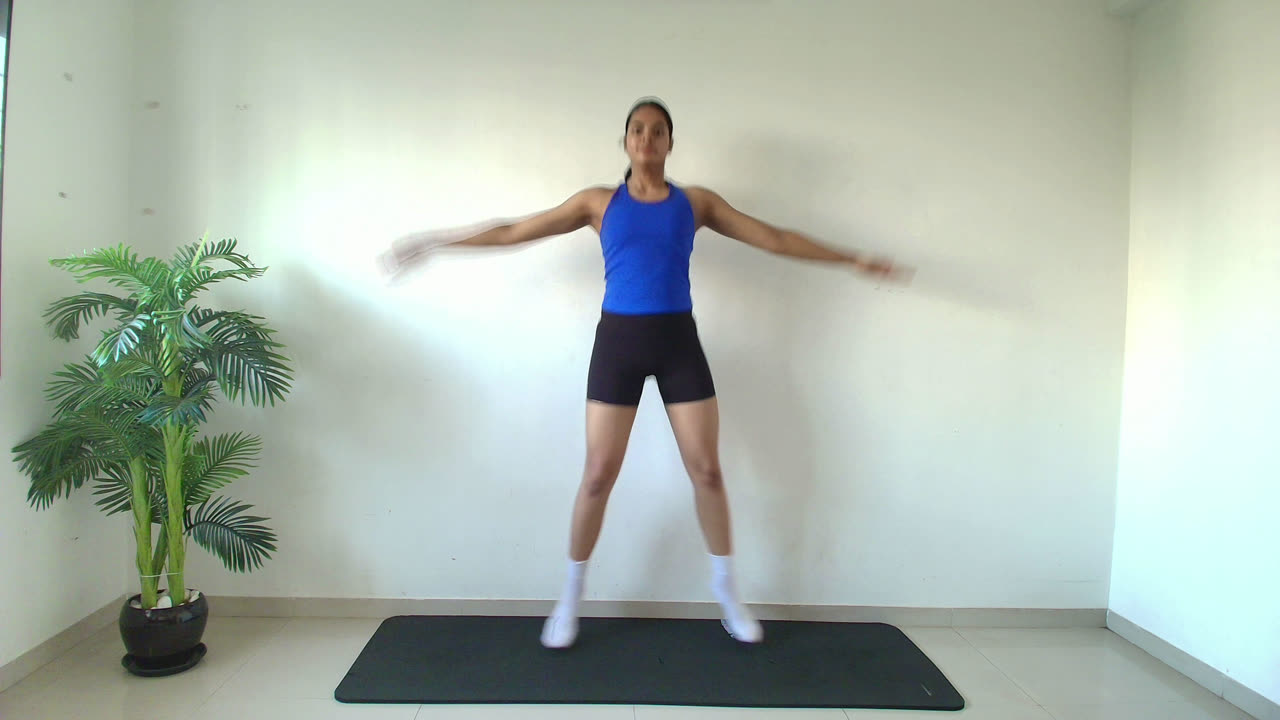
- Anti-extension: resisting an arched lower back, as in planks and dead bugs.
- Anti-rotation: keeping the hips and ribs square, as in shoulder taps.
- Side stability: holding the body steady from the side, as in side planks.
- Controlled spinal flexion: curling the spine with control, as in reverse crunches.
- Hip and pelvis control: keeping the pelvis steady while legs move.
Pick your level by control, not ego. If your lower back arches, hips sag or breathing stops, the move is too hard right now. Stop if you feel sharp pain, numbness, or worsening back pain. Shorten the range of motion or use the easier version.
Level test
- Hold a forearm plank with ribs down and glutes lightly squeezed.
- Hold a side plank on each side.
- Perform 8 slow dead bugs per side without the low back lifting.
- Beginner: plank under 30 seconds, or dead bug control breaks.
- Intermediate: plank 30–60 seconds and side plank 20–30 seconds per side.
- Advanced: plank over 60 seconds, side plank over 45 seconds per side, and clean dead bugs.
10-minute beginner core workout: no equipment, low impact
This is the best starting routine if you are new to core training, coming back after a break, or want a gentle home workout. Use timed work so you do not rush. Focus on bracing, breathing and keeping your lower back comfortable.
Do this 2–3 times per week, with at least one rest or lighter day between sessions. If you want a broader beginner plan, use this with a simple full-body routine like the home workout plan for beginners.
Beginner workout
Warm-up: 2 minutes
- Cat-cow x 6
- Hip circles x 6 each way
- Marching in place x 45 seconds
Circuit: repeat twice
| Move | Work | Rest |
|---|---|---|
| Dead bug | 30 seconds | 30 seconds |
| Glute bridge hold | 30 seconds | 30 seconds |
| Forearm plank from knees | 20 seconds | 40 seconds |
| Bird dog | 30 seconds | 30 seconds |
| Side plank from knees, left | 20 seconds | 0 seconds |
| Side plank from knees, right | 20 seconds | 40 seconds |
Target effort: 6–7 out of 10. You should feel challenged, but able to breathe and keep control.
20-minute core strength workout: build stability and definition
Use this intermediate routine if you can already plank with good form. It balances front-core strength, side-core strength, rotation control and lower-ab control.

Rest enough to keep form. This is not meant to become a sloppy cardio session. More burn is not always better. The goal is controlled tension and clean reps.
Intermediate workout
Warm-up: 3 minutes
- Inchworm walkouts x 5
- Bodyweight good mornings x 10
- Slow mountain climbers x 20 total
Main circuit: 3 rounds
| Move | Reps or time | Rest |
|---|---|---|
| Forearm plank shoulder taps | 20 total | 30 seconds |
| Reverse crunch | 12–15 | 30 seconds |
| Side plank reach-through | 8 each side | 45 seconds |
| Hollow body hold | 20–30 seconds | 45 seconds |
| Slow bicycle crunch | 10 each side | 60 seconds |
Cooldown: child’s pose breathing for 60 seconds.
Advanced no-equipment core workout: athletic control at home
This harder option is useful if you want athletic control, but it is not necessary for everyone. It uses tempo, longer levers, single-side control and shorter rest instead of equipment.
Do not advance if your lower back arches during hollow holds or your hips twist during plank variations. Use the substitution listed next to each move.
Advanced workout: 4 rounds
| Advanced move | Easier substitution |
|---|---|
| Hollow body rocks x 20 seconds | Hollow hold |
| Plank to push-up x 8 each side | High plank shoulder taps |
| V-up x 10–12 | Tuck-up |
| Side plank hip dips x 12 each side | Regular side plank |
| Bear crawl hold with opposite shoulder taps x 20 total | Bear hold |
Rest 30–45 seconds between moves and 90 seconds between rounds.
How often to train your core: weekly plans for different goals
Most people do best with 2–4 focused core sessions per week, not maximum-effort abs every day. Your core also works during squats, lunges, push-ups, walking and lifting everyday objects, so recovery matters.
Users who prefer guided sessions can use Thrive Fit’s core workout app, including the 8-week core & waist journey or challenges such as Gentle Core 14, Stability & Planks 7, Core Rotation 10, Core Development 14, or Lower-Body & Core 14. The app uses guided bodyweight circuits at home with timed work and rest.
Sample week: beginner
| Day | Plan |
|---|---|
| Monday | 10-minute beginner core |
| Tuesday | Walk 20–30 minutes |
| Wednesday | Rest |
| Thursday | 10-minute beginner core |
| Friday | Easy walk |
| Saturday | Optional gentle core or mobility |
| Sunday | Rest |
Sample week: fat-loss focused
| Day | Plan |
|---|---|
| Monday | Core strength workout |
| Tuesday | Brisk walk 30–45 minutes |
| Wednesday | Full-body bodyweight circuit |
| Thursday | Rest or mobility |
| Friday | Core workout |
| Saturday | Longer walk 45–60 minutes |
| Sunday | Rest |
For fat loss, see how to lose belly fat at home. The key is losing fat overall, not trying to burn it from one body part.
Progression: how to make core workouts harder without equipment
Progress only when you can complete all sets with steady breathing, no hip sagging and no lower-back discomfort. Change one thing at a time: more time, more reps, slower tempo, longer lever, less rest, or a harder variation.
Stay with a workout for about 2 weeks before changing too much. If form drops for two sessions in a row, reduce time or reps by about 20% for one week, then build again.
| Start | Progress | Harder |
|---|---|---|
| Dead bug | Dead bug with straight legs | Hollow hold |
| Knee plank | Forearm plank | Long-lever plank |
| Knee side plank | Full side plank | Side plank hip dips |
| Glute bridge | Single-leg bridge | Bridge march |
| Reverse crunch | Slow reverse crunch with 3-second lowering | V-up |
Example: if you can plank 3 rounds of 30 seconds cleanly, progress to 35–40 seconds before choosing a harder plank variation.
Form checklist: the core cues that make each rep work
Bracing should feel firm, not rigid. Exhale, gently tighten as if preparing for a cough, then breathe behind that tension.
Common mistakes include ribs flaring, lower back arching, holding your breath, pulling the neck, rushing reps and letting the hips rotate. Mild muscle fatigue is normal. Sharp pain is not.
Pre-set checklist
- Can I breathe while braced?
- Are ribs stacked over pelvis?
- Is my lower back neutral rather than aggressively arched?
- Are shoulders away from ears?
- Can I slow the rep down by 2 seconds?
Troubleshooting
- If planks hurt your back, shorten the hold or use knees.
- If crunches strain your neck, place fingertips lightly behind ears and look at the ceiling.
- If dead bugs feel easy, move slower before adding difficulty.
- If shoulder taps twist your hips, widen your feet or return to a normal plank.
If your goal is a flatter stomach: pair core workouts with a simple nutrition target
Core workouts strengthen muscles, but visible changes around the waist usually also require overall fat loss if body fat is the main issue. A practical target is protein at each meal, high-fiber carbs or vegetables, and measured fats.
Thrive Fit sets calorie targets using Mifflin–St Jeor with an activity factor, uses a 300 kcal deficit for weight loss, and includes meal plans plus editable Meal Scan estimates. You can also use the free calorie calculator and browse meal plans.
Illustrative nutrition example
A 35-year-old woman, 165 cm, 75 kg, lightly active, has an estimated BMR of about 1,445 kcal using Mifflin–St Jeor. Light activity factor 1.375 gives maintenance around 1,987 kcal/day. A 300 kcal deficit gives about 1,687 kcal/day. Protein at 1.8 g/kg = about 135 g/day.
Sample day around 1,650–1,750 kcal
- Greek yogurt bowl with berries and oats: about 430 kcal and 35 g protein
- Chicken or tofu salad wrap: about 500 kcal and 40 g protein
- Salmon or lentil dinner with potatoes and vegetables: about 600 kcal and 45 g protein
- Cottage cheese or edamame snack: about 180 kcal and 15 g protein
If you are pregnant, have a medical condition, have an injury, or would need very low calories to lose weight, speak with a qualified clinician before changing your plan.
FAQ
What is the best core workout for beginners?
The best beginner core workout is low impact and controlled: dead bugs, glute bridge holds, knee planks, bird dogs and knee side planks. Do 10 minutes, 2–3 times per week.
Can I do core workouts every day?
You can do light core activation often, but most people do better with 2–4 focused sessions per week. Hard core workouts need recovery, just like leg or upper-body workouts.
Are planks enough to build a strong core?
Planks help, but they are not enough by themselves. Add side planks, dead bugs, reverse crunches and anti-rotation moves so your core gets strong in more positions.
Will core workouts burn belly fat?
No exercise spot-reduces belly fat. Core workouts strengthen the muscles underneath, while a calorie deficit, protein, walking and strength training help reduce body fat overall.
Should I train core before or after a full-body workout?
Usually train core after your main full-body work so your trunk is fresh for squats, lunges and push-ups. Do a few easy dead bugs or planks before if they help you feel braced.