Weight Loss: A Safe 12-Week Plan That Works
Lose weight with a realistic calorie target, protein, home workouts, tracking rules, and a 12-week plan you can repeat.
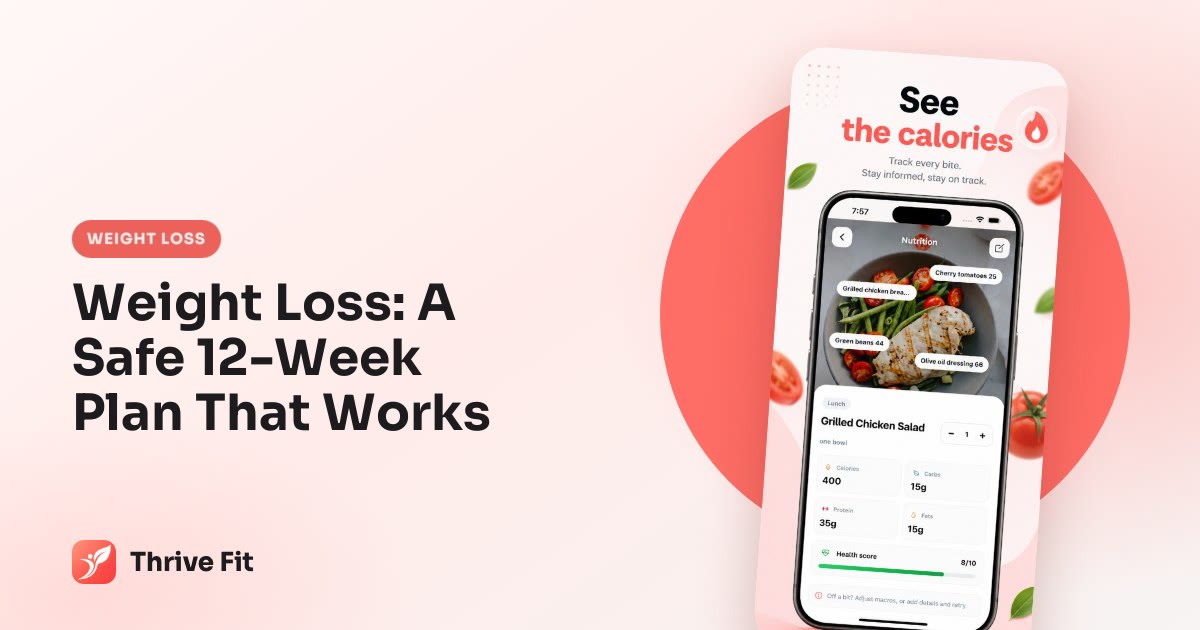
To lose weight, you need a calorie deficit you can repeat for weeks, while eating enough protein and moving enough to keep muscle and energy. Aim for steady fat loss, not a perfect day, detox, supplement, or punishment workout. This guide gives you the numbers, meals, workouts, tracking rules, and 12-week structure to start safely.
Weight loss, in one page: what actually has to happen
Weight loss happens when you burn more energy than you eat over time. A single food, workout, cleanse, or supplement does not create lasting fat loss by itself.

The real goal is usually fat loss while keeping muscle, energy, and consistency as high as possible. A realistic pace for many people is about 0.5–1% of body weight per week. Progress varies with starting weight, adherence, sleep, stress, menstrual cycle, medications, and water retention.
Use four levers:
- Calories: choose a modest target.
- Protein: make meals more filling and protect muscle.
- Movement: lift, walk, and recover.
- Tracking: use trends, not guesses.
Safety note: if you are pregnant, under 18, have a history of eating disorders, have diabetes, kidney disease, heart disease, or take medication that affects weight, speak with a qualified clinician before starting a weight-loss plan.
Quick-start checklist
- Weigh yourself 3 mornings this week and record the average.
- Estimate maintenance calories with a calculator.
- Choose a modest deficit.
- Set a daily protein target.
- Plan 3 workouts and 2 walks this week.
- Pick 2 repeatable breakfasts and 2 repeatable lunches.
- Review progress after 14 days, not after 2 days.
Step 1: choose a calorie target you can actually repeat
Maintenance calories are the approximate number of calories that keeps your body weight stable. To lose weight, start below that number, but avoid crash dieting.
The free Thrive Fit calorie calculator can estimate a starting point. In the Thrive Fit app, calorie targets use Mifflin–St Jeor BMR multiplied by an activity factor, then about 300 kcal below maintenance for weight loss, with targets kept between 1,200 and 3,500 kcal. No calculator is perfect, so treat the number as a starting estimate.
Do not cut calories every time the scale jumps. Use 2–3 weeks of data before adjusting. For deeper calorie examples, read How Many Calories Should I Eat to Lose Weight?.
Illustrative worked example
Person: 35-year-old woman, 165 cm, 82 kg, lightly active.
- Estimated BMR using Mifflin–St Jeor: about 1,515 kcal/day.
- Activity estimate at 1.375: about 2,083 kcal/day maintenance.
- Starting weight-loss target with a 300 kcal deficit: about 1,780 kcal/day.
- Adjustment rule: if the 14–21 day average weight is not moving at all, reduce by 100–150 kcal/day or add 2,000–3,000 steps/day.
Step 2: build meals around protein, fiber, and planned portions
Use a simple plate method: half the plate vegetables or fruit, one quarter protein, one quarter starch or whole-grain carbohydrate, plus a measured fat source.

Protein is the anchor. As a practical rule, Thrive Fit sets protein at 1.8 g/kg for weight loss and strength goals, 1.5 g/kg for maintenance, fat at 28% of calories, and carbohydrates as the remaining calories. Higher-protein meals can make a deficit easier and support muscle retention when paired with resistance training.
Portion anchors help when you do not want to weigh everything:
- Protein: 1 palm-sized portion.
- Cooked carbs: 1 fist.
- Vegetables: 1–2 fists.
- Fats: 1 thumb-sized portion.
For planned meals, use the free meal plan pages, including Weight Loss, High-Protein, Mediterranean, Vegetarian, Vegan, Low-Carb, Gluten-Free, Dairy-Free, Pescatarian, and Intermittent Fasting 16:8.
Sample 1,750 kcal day, illustrative
- Breakfast: Greek yogurt bowl with 250 g low-fat Greek yogurt, berries, 30 g oats, and 10 g chia seeds, about 430 kcal and 35 g protein.
- Lunch: chicken or tofu rice bowl with 120–150 g protein, 150 g cooked rice, salad vegetables, salsa, and 1 tbsp olive-oil dressing, about 550 kcal and 35–45 g protein.
- Snack: apple plus 25 g nuts or a protein shake, about 220 kcal and 10–25 g protein.
- Dinner: salmon, turkey, beans, or tempeh with potatoes and roasted vegetables, about 550 kcal and 35–45 g protein.
Step 3: use exercise to keep muscle, burn energy, and make the plan easier
Nutrition drives most of the calorie deficit. Training helps preserve muscle, improve fitness, and increase daily energy use.
A good weekly mix is 2–4 resistance-style bodyweight sessions, 2–4 walking or low-intensity cardio sessions, and at least 1 easier recovery day. Beginners can train at home with no equipment. If you want a full progression, use the beginner home workout plan.
Do not chase spot reduction. Core training strengthens your midsection, but belly fat comes off through overall fat loss. For more on that, read How to Lose Belly Fat at Home.
Sample 25-minute no-equipment circuit
- Warm-up, 4 minutes: marching in place, arm circles, hip hinges, bodyweight good mornings.
- Circuit: 3 rounds, 40 seconds work and 20 seconds rest per move: squat to chair, incline push-up against counter, reverse lunge alternating legs, dead bug, glute bridge, mountain climber slow pace.
- Rest: 90 seconds between rounds.
- Cooldown, 3 minutes: easy walk, quad stretch, chest opener.
- Make it easier: use 30/30 work-rest.
- Make it harder: add a 4th round or use 45/15 intervals.
Step 4: follow a 12-week weight-loss structure instead of improvising every Monday
A structure helps you know what to do now, when to adjust, and when to avoid overreacting.
- Weeks 1–2: set targets, learn meals, establish tracking, and keep workouts manageable.
- Weeks 3–6: improve consistency, add one extra walk or workout if recovery is good, and refine portions.
- Weeks 7–10: make the smallest necessary adjustment only if the trend has stalled.
- Weeks 11–12: decide whether to continue, maintain, or take a diet break. The Thrive Fit weight-loss journey is 12 weeks and may run longer at a higher BMI, up to 16 weeks.
12-week schedule template
- Monday: bodyweight circuit, 25–30 min.
- Tuesday: 30–45 min brisk walk.
- Wednesday: strength/core circuit, 20–30 min.
- Thursday: rest or gentle walk.
- Friday: full-body circuit, 25–30 min.
- Saturday: longer walk, 45–60 min, or active hobby.
- Sunday: rest, grocery plan, weigh-in average review, choose 3 dinners for the week.
Weeks 1–2: do 2 circuits if needed. Weeks 3–6: aim for 3 circuits. Weeks 7–12: keep 3 circuits and increase daily steps before cutting more food.
Step 5: track the right things without becoming obsessive
Scale weight is useful, but noisy. Water, sodium, carbohydrate intake, digestion, soreness, and menstrual cycle changes can move the scale without reflecting fat gain.
Use weekly averages instead of single weigh-ins. Add waist measurement, progress photos, workout completion, protein consistency, and steps as supporting metrics. In the Thrive Fit app, users can log weight and BMI, progress photos, water with a daily target of about 32 ml per kg body weight, streaks, achievement badges, and Meal Scan estimates for calories and macros that can be edited before logging. Meal Scan is only an estimate, so correct it when you know the ingredients or portions.
Weekly review card
- Average weight this week: ___.
- Average weight last week: ___.
- Workouts completed: ___/3.
- Walks completed: ___/2.
- Protein target hit: ___ days.
- Calories within target range: ___ days.
- Waist measurement, same time and place: ___.
- Progress photo taken: yes/no.
- Decision: keep plan unchanged, adjust portions slightly, add steps, or improve weekend tracking.
Step 6: handle plateaus, hunger, weekends, and eating out
A plateau is no meaningful change in your 2–3 week average, not a few days of stable weight.
Troubleshoot in this order: tracking accuracy and weekend intake, then protein and fiber, then steps, then calories. Hunger fixes should be practical: larger vegetable portions, leaner protein swaps, planned snacks, higher-volume meals, and consistent meal timing.
For eating out, pick protein first. Choose one main carb or fat-heavy item, ask for sauces on the side, and stop at satisfied rather than stuffed.
Stop dieting or seek guidance if you have persistent fatigue, poor sleep, irritability, performance drops, or cannot maintain the plan.
Plateau troubleshooting checklist
- Did you track Friday–Sunday?
- Are cooking oils, sauces, nuts, alcohol, and bites/tastes logged?
- Are you hitting protein at least 5 days/week?
- Are you getting 25–35 g fiber/day from foods like beans, vegetables, fruit, oats, and whole grains?
- Has step count dropped?
- If all are yes and the 3-week average is flat, change one variable: minus 100–150 kcal/day or plus 2,000 steps/day.
Step 7: what to do after the weight comes off
Maintenance needs its own plan. If you stop every habit that helped you lose weight, regain becomes more likely.
Move calories slowly toward maintenance instead of returning straight to old intake. Keep protein, steps, and 2–3 strength sessions as your anchors. Set a maintenance range, not one exact weight, such as goal weight plus or minus 1–2 kg. After a meaningful weight change, update your calorie estimate because a lighter body usually burns fewer calories.
Maintenance transition example
If someone lost weight eating 1,800 kcal/day and estimated new maintenance is 2,100 kcal/day, add 100 kcal/day for 1 week, review the 7-day weight average, then add another 100 kcal/day if weight is stable. Keep 3 workouts/week and 7,000–10,000 steps/day if that was sustainable during weight loss. Set an action range: if average weight rises more than 2 kg above target for 2 weeks, return to the basic tracking checklist for 14 days.
FAQ
What is the fastest safe way to lose weight?
For most adults, the fastest sensible approach is a moderate calorie deficit, high-protein meals, daily walking, and 2–4 strength workouts per week. Very aggressive diets often cause hunger, fatigue, and rebound.
How many calories should I eat to lose weight?
Estimate maintenance calories, then start about 300–500 kcal below it. Hold that target for 2–3 weeks and adjust only if your average weight is not moving.
How much weight can I lose in 12 weeks?
Many people aim for about 0.5–1% of body weight per week. Your result depends on starting weight, consistency, sleep, stress, medication, and water retention.
Do I need to cut carbs to lose weight?
No. You need a calorie deficit. Carbs can fit, especially from potatoes, oats, rice, fruit, beans, and whole grains. Protein, fiber, and portions matter more.
Can I lose belly fat specifically?
You cannot spot-reduce belly fat. Core exercises strengthen the muscles underneath, but belly fat decreases through overall fat loss from nutrition, training, walking, and time.